To Stand Bare — Vittorio Marella
The Poetics of Abandonment
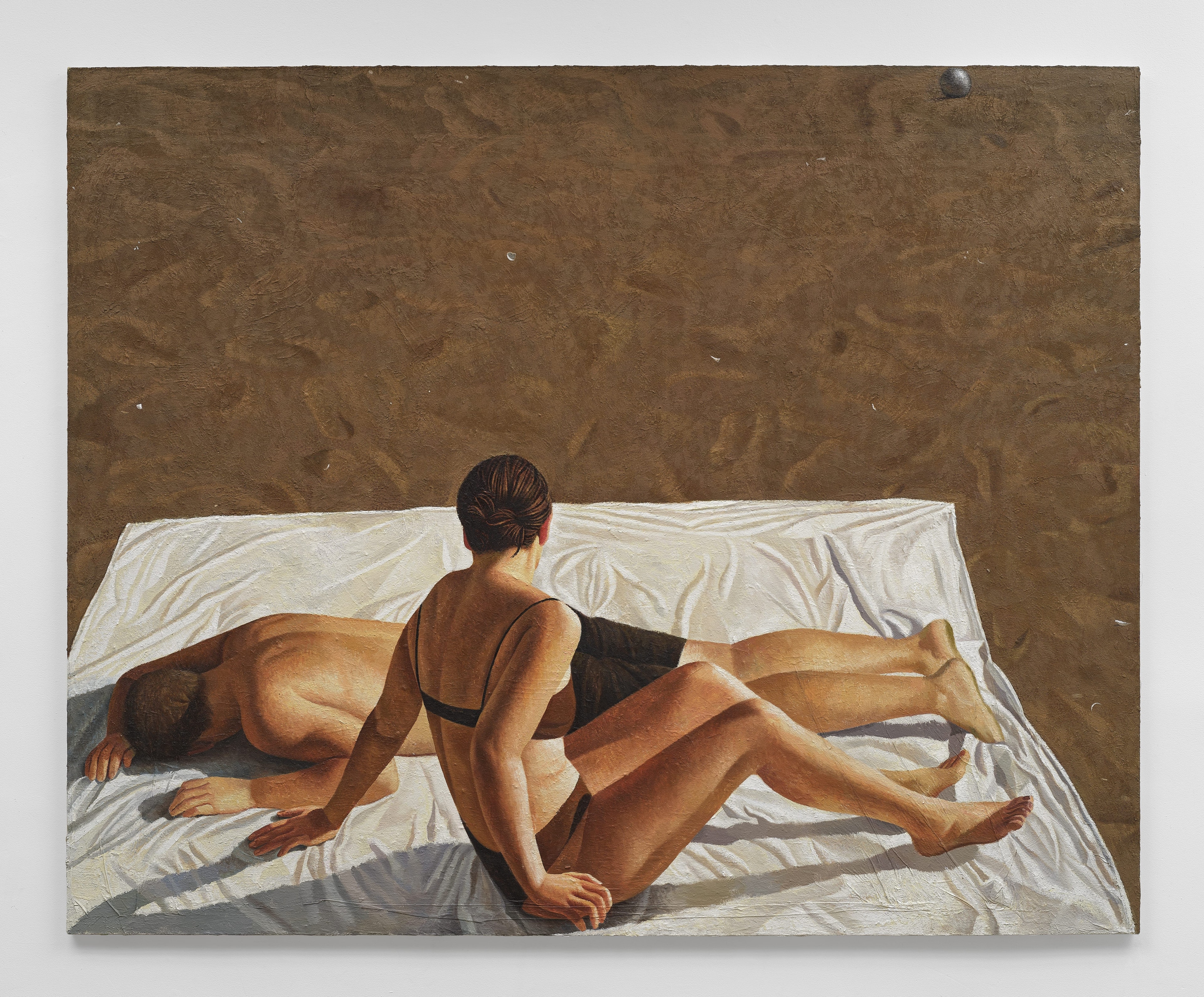
To surrender to change, or to change to avoid it? This is the dilemma pondered by the figures in To stand bare, as they gaze upon boundless maritime horizons or dense, ever-unchanging banks of clouds. For those living outside the paintings, this might seem an almost trivial choice, another existential question destined to vanish into a drawer before long. Yet for those static, heated bodies, taking a stand offers the chance to reshape and transform the entire world that hosts them. In this solo exhibition we have the chance to engage with the same doubt.
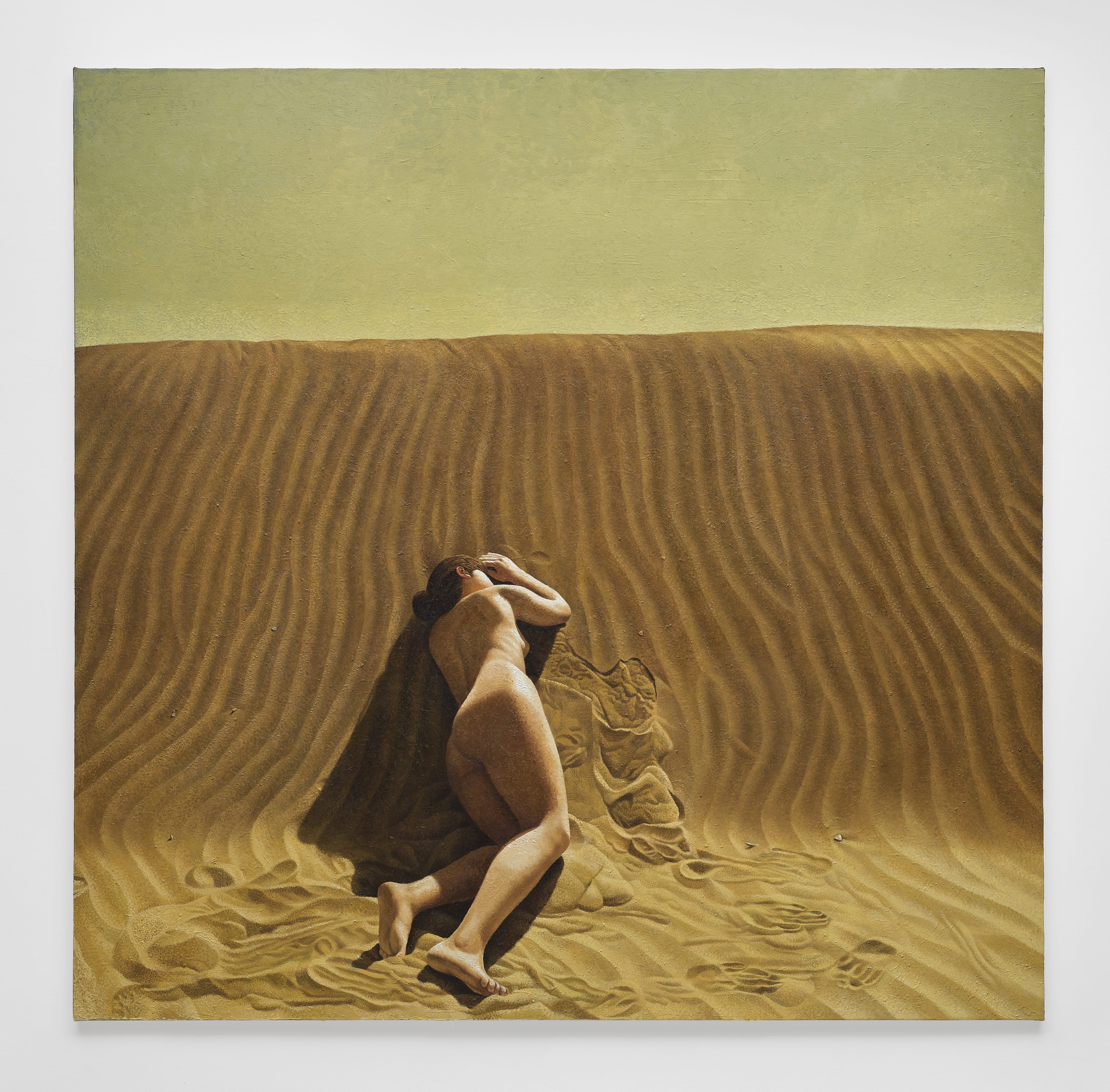
The scenes Marella depicts use natural elements such as sand and the sea to speak of the passage of time, subtly evoking the exertion of crossing a desert or battling a ceaseless tide. The protagonists of these liminal, almost metaphysical environments, created through the stylization and repetition of natural elements such as dunes or waves, are robust, three-dimensional human figures, used as anchors within scenes that might otherwise risk being unconsciously sublimated.
Although the sun never appears in its original form, it is omnipresent. In the paintings, the sun exists by virtue of its rays and, through them, becomes personified. And if light is inevitable, so is its consequence: a scorching world that becomes a metaphor for an unprecedented climate crisis. The fourth wall is thus deliberately blurred by the artist to introduce a real and all-too-topical theme, exaggerated on the canvas without, however, imbuing it with an explicit intent to denounce. In this sense, the landscapes depicted read more as an observation than a warning.
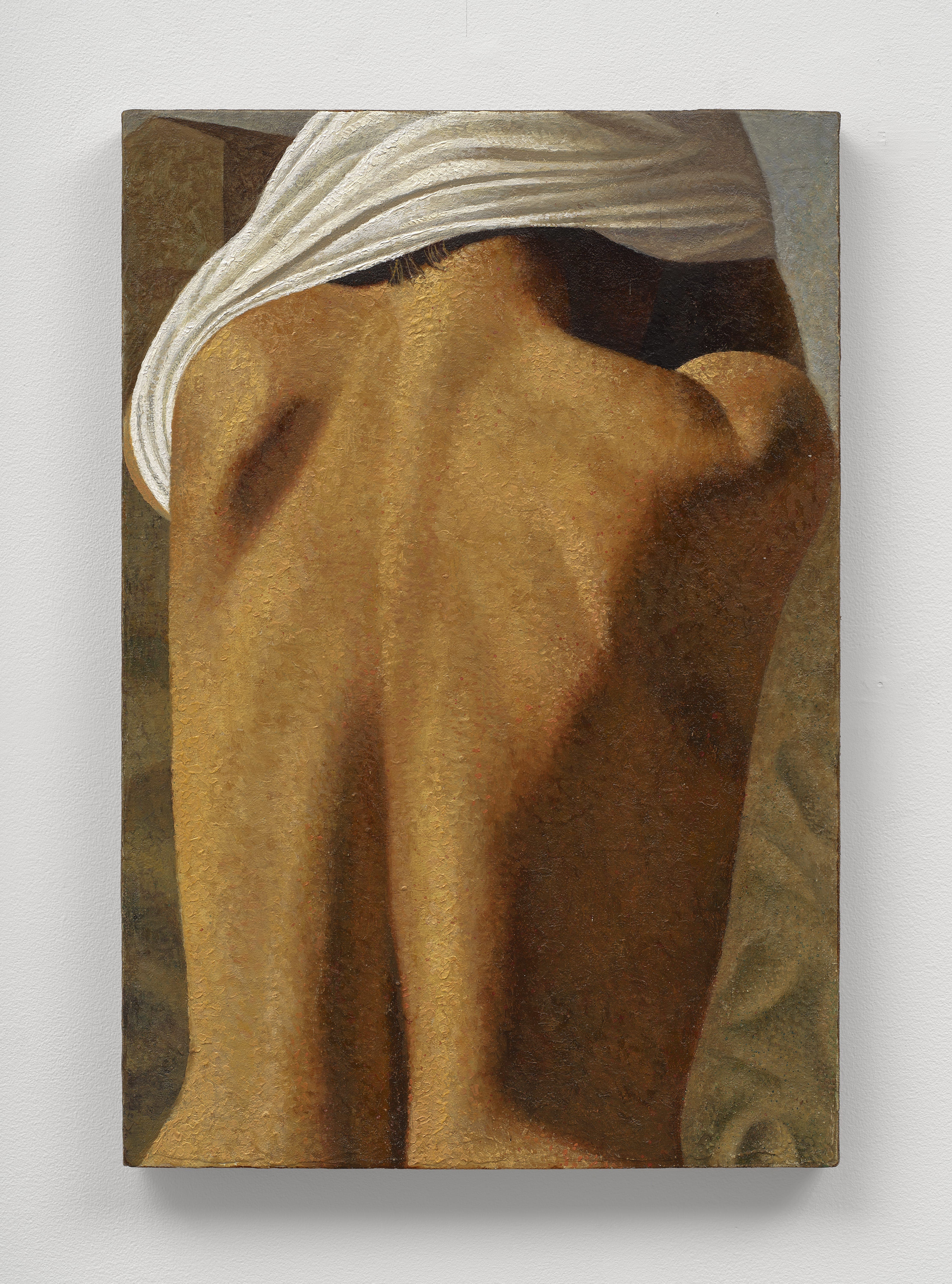
Everything created by humankind is used by Marella as a symbol. Clothes, in particular, are seen by the artist as a second skin: the act of undressing takes on deeper connotations, becoming the emblem of an inner transformation. The theme of fabric is echoed in the very composition of the canvas, within which materials such as cloth, sand, and shells often coexist. The artist prefers to create his own supports from scratch, layering organic and pictorial elements that are arranged, left to dry, and then planed, so the surface mirrors the realism of a geological process. Much of that material is gathered from the beaches of the Venice Lido.
Text by Beatrice Timillero, courtesy of Amanita.
Vittorio Marella (b. 1997, Venice) is a painter who lives and works between Venice and London. He initially studied Astrophysics at the University of Padua. His work has been exhibited at the Mart Museum in Rovereto (2025), Palazzo Merulana in Rome (2024), Museo degli Eremitani in Padua (2021), and the Rijksmuseum in Amsterdam (2019). In 2024 he was one of four artists presented for the Venice Pavilion during the Venice Biennale.
On view across Amanita's two Bowery-area spaces: 313 Bowery and 1 Freeman Alley, New York. Opening reception Saturday, September 12, 2026, 6–8 PM.
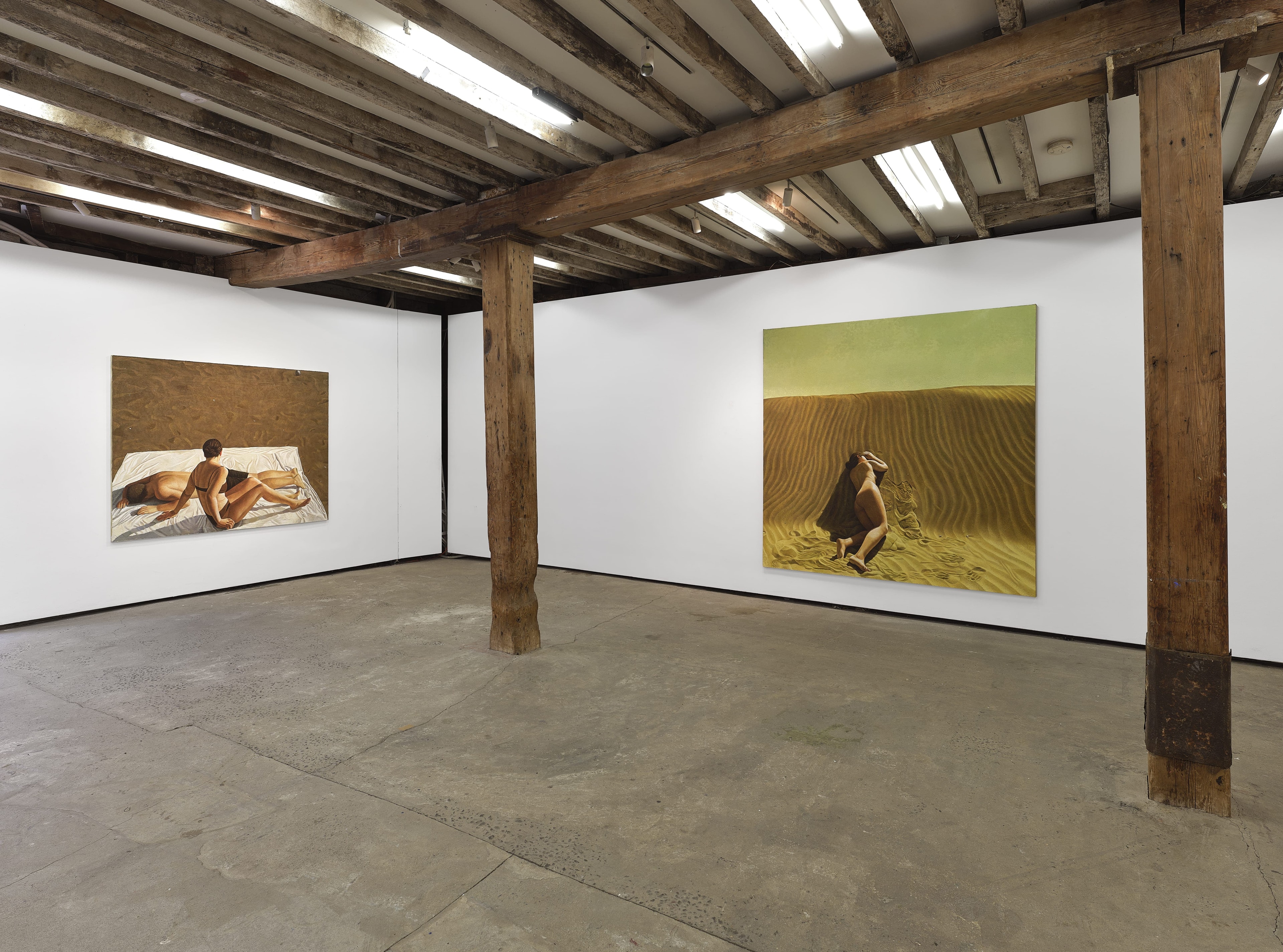
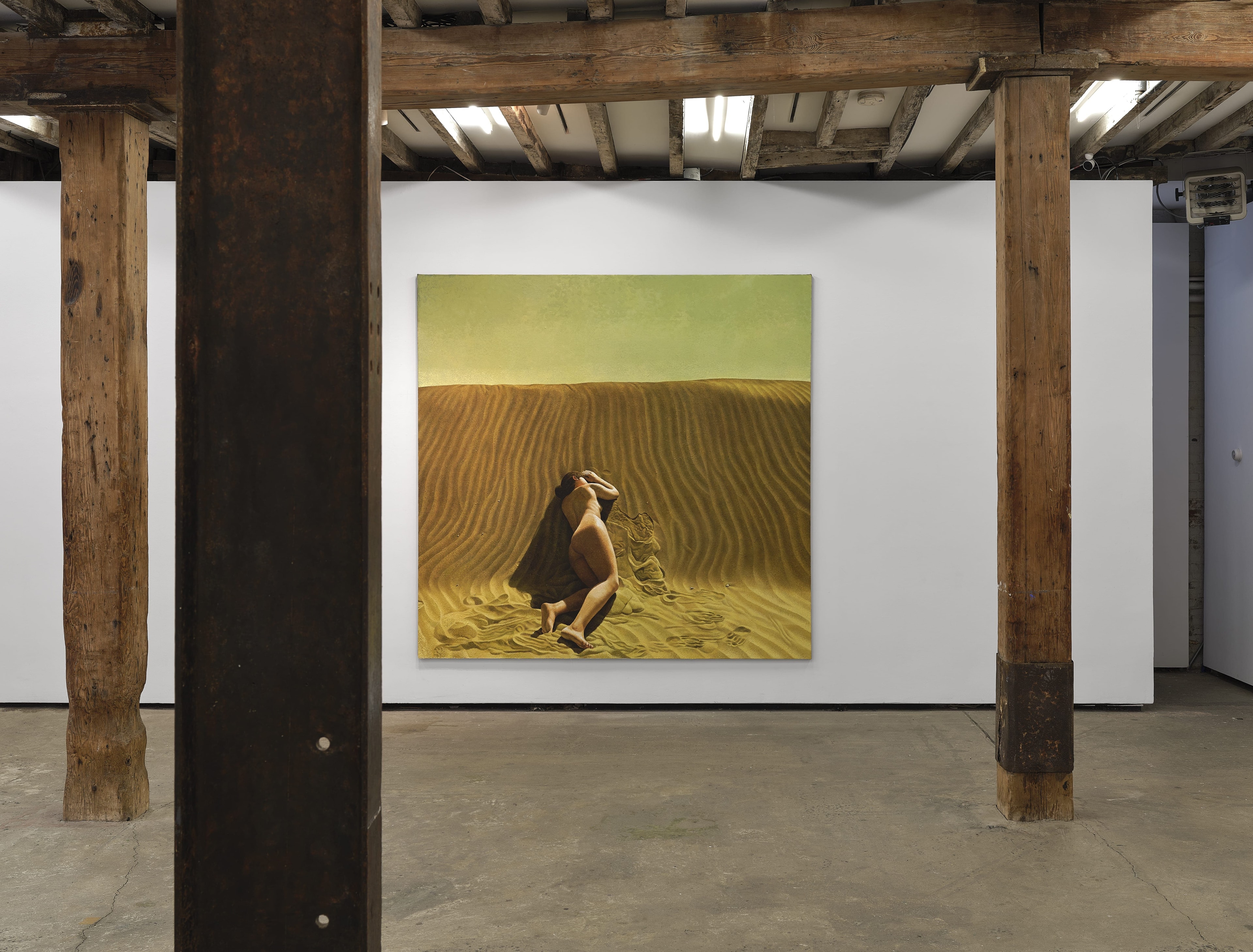
Installation Views
Artists
Events
Your Notes
Record your impressions