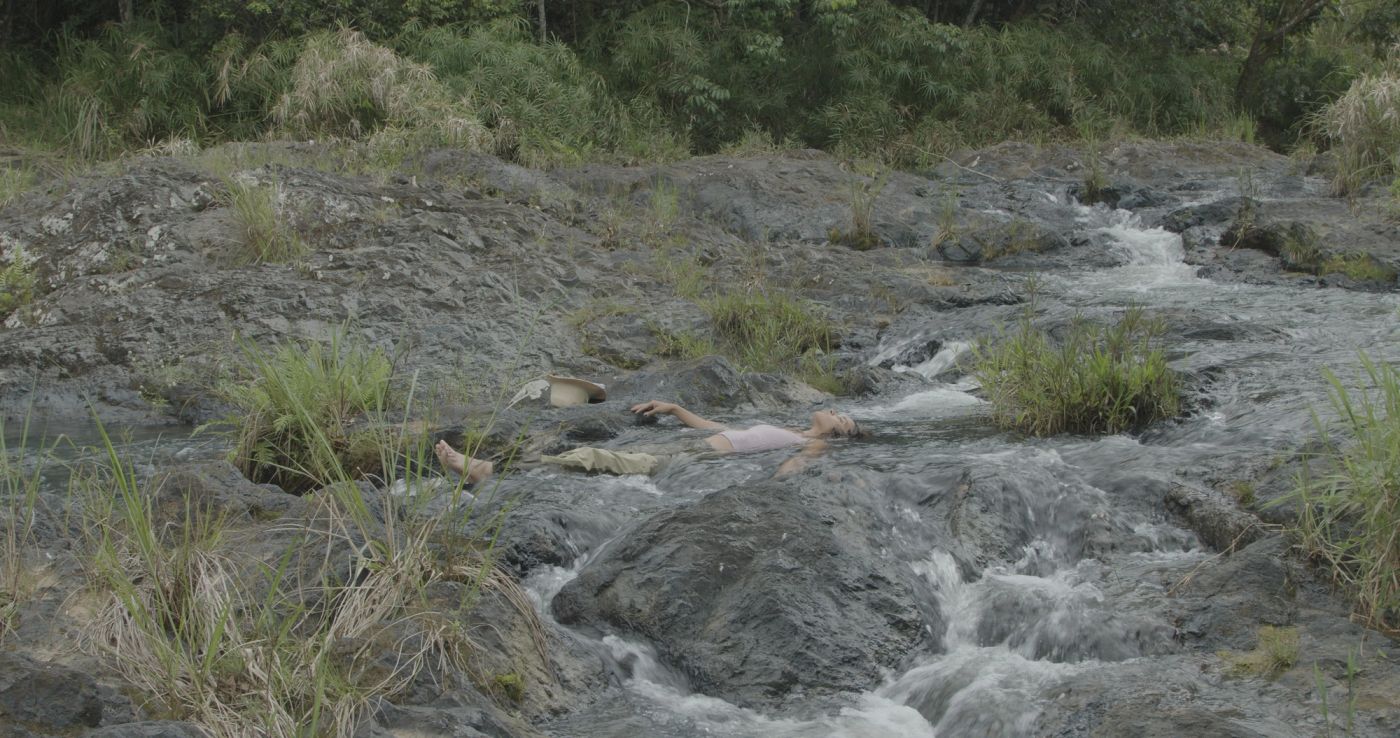
En Parábola/Conversations on Tragedy is a work spanning performance, film installation, and an exhibition that reassembles the Greek myth of Antigone through collaboration with an ensemble of nontraditional actors residing in Puerto Rico and in New York City’s Puerto Rican diasporic community. Developed through a multi-year process of collaborative rehearsal and experimental filmmaking, the ensemble creates a shared space to examine the collective consciousness shaped by decades of environmental, economic, political, and spiritual tragedies in the archipelago.
Directed by Natalia Lassalle-Morillo as part of her two-year La Residencia residency with Abrons and Pública Espacio Cultural in San Juan, Puerto Rico, and organized by residency curator Natalia Viera-Salgado, En Parábola/Conversations on Tragedy will be presented at Abrons Arts Center as a two-part film installation. Part I chronicles the New York-based cast’s process of rehearsing and reassembling the myth, while Part II follows a Puerto Rico-based ensemble as they develop their own perspective on and interpretation of Antigone. The film installation will be accompanied by an exhibition featuring works created in collaboration with the nontraditional performers, tracing and unraveling the nearly eight-year process of creation, research, and exchange between New York City and Puerto Rico.The work was developed in collaboration with Erica Ballester, Yulliana Padilla, Rosa Plá, Yasmín Ramírez, Nina Lucía Rodríguez, Raquel Rodríguez, Fiamma Seda and Emma Suárez - Báez.
En Parábola/Conversations on Tragedy, is commissioned as part of La Residencia, a residency partnership between Abrons Arts Center and Pública Espacio Cultural (San Juan, PR), made possible with funds provided by the Mellon Foundation, and presented in partnership with the Museo de Arte Contemporáneo de Puerto Rico. Additional funding for the project’s presentation in Puerto Rico provided by: Comisión Especial Conjunta de Fondos Legislativos para Impacto Comunitario and The Wallace Foundation. Film Part 1 was funded and commissioned by Amant, with additional support from the Mellon Foundation, Princeton University, and Centro.
 Abrons Art Center