Nov 6 – Dec 17, 2026
Katsu Naito: West Side Rendezvous — Katsu Naito
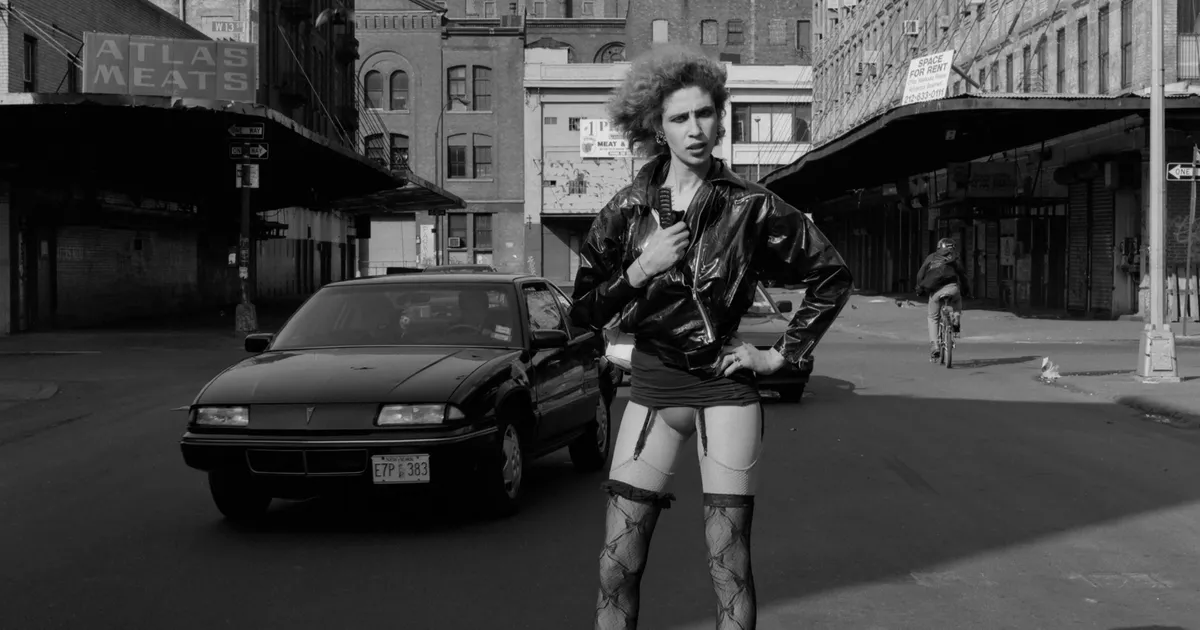
New York Life Gallery presents Katsu Naito: West Side Rendezvous, Naito’s black-and-white photographic series depicting the Meatpacking District’s community of sex workers, many of whom identified as queer and trans, in the early 1990s. The Americans portrayed post-war American society with verity and rawness, Naito was an outsider. When he arrived in New York in 1983 from Maebashi, a regional city in Japan, he was on a three-year contract to work in a Japanese restaurant. With only limited English, Naito purchased a camera as “a way of communicating with New York.” One afternoon, walking west along 16th Street toward Tenth Avenue, Naito glimpsed figures who, from a distance, appeared to be dancing. As he got closer, Naito realized they were women working the street. Snapping a series of images, later that evening he developed the negatives. In the words of Naito: “That was the beginning of everything.”
The Meatpacking District had two distinct shifts. The butchers and meat purveyors would leave each day around two in the afternoon. The district would fall quiet before the sex workers trickled to claim their corners. Naito would take a place on Washington Street, around 13 th Street, his camera in his backpack. At first, he struck up conversations with the women he encountered, bringing coffee and hand warmers on cold days. Over time, he became friendly with many of them, and it was only then that his camera came out. According to Naito, his method was direct and intimate, never hidden. “I was also being seen,” he notes. In time, as he became close to those he photographed, he discovered a community that existed “almost like a family.” They had “strength, beauty, humor, and a clear sense of their own will.” There is much to hold the eye’s attention in the photographs of West Side Rendezvous; there is also more, much more, than can be seen. HIV/AIDS, the specter of death, is beyond the frame, but within arm’s reach. Violence and addiction, prejudice and discrimination, too. Unseen, but never absent. As the brilliant scholar Jih-Fei Cheng observes of the AIDS retrospectives that have followed in the wake of the epidemic, women and queers of color all too often “appear only in order to go missing.” In Naito’s images, they stay. Though West Side Rendezvous is a historical document of a past, it is also a body of work which has lost none of its vitality—nor its urgency. That we want to honor Naito’s subjects, to make them a part of a shared history, is testament to the power the images possess. When he wrote Camera Lucida, Roland Barthes, the queer patron saint of photography’s poetics, had a name for the medium’s claims upon certainty and proof: the “that-has-been.” In other words: Naito’s photographs are a physical testament that the women we see depicted in them were there, on that corner, in the Meatpacking District, the day they were photographed. More plainly—they existed. Importantly, for Barthes, photographs don’t just exist as proof of the past; rather, they are possessed of a past reaching out to touch us directly like “the delayed rays of a star,” the light embodied within them akin to a “skin” radiating outward towards the viewer. Naito’s black-and-white images are records of a past that remains forever caught in the moment of their creation. Light captured, never dimmed. While the image remains unchanged, the subject is transient, made of light, yes, but also flesh and bone.
So what of the slippage between the crystallized…
Events
Venue info
NNew York Life GalleryLoading notes…