Nov 5 – Dec 19, 2026
Jakkai Siributr: Torrents of Rain — Jakkai Siributr
Closed · opens tomorrow 10AM
SilverlensTorrents of Rain is an exhibition about how loss and grief never truly fade. Memories persist, and carry a discomforting sense of the uncanny, personal and political. Animism has been described as not a belief but a boundary-making, or boundary-defense, practice. This can be understood in many ways: between an insistence on the real against the fictional, the rational versus irrational, the definitive self and Other, and more. Siributr, like many of his lauded contemporaries such Araya Rasdjarmrearnsook, Sakarin Krue-On, or Apichatpong Weerasethakul, meld boundaries between. Their works are not merely observed but whelming. The otherworldly breaks through.
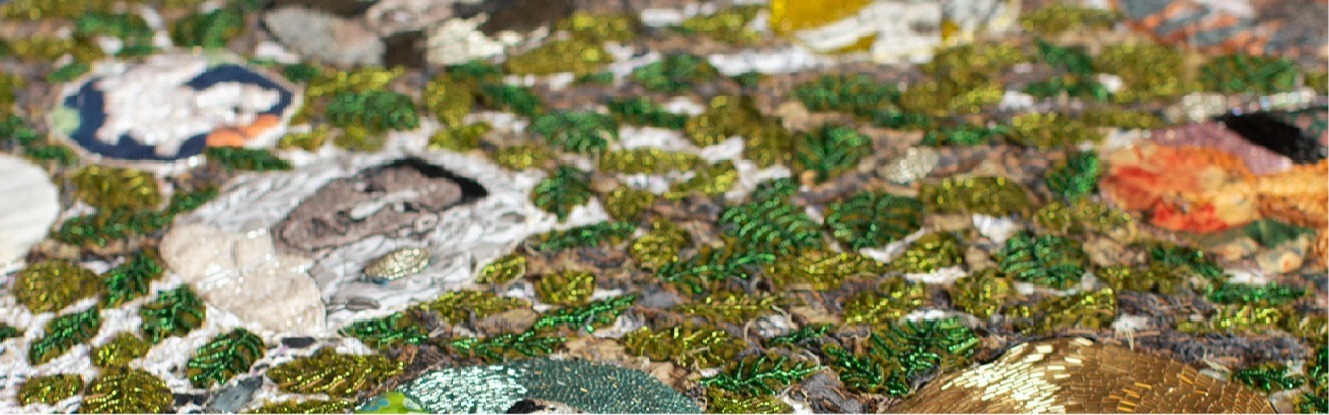
Works included build on the artist’s increasing excavation of his aristocratic family’s history. An earlier installation titled 18/28: the Singhaseni Tapestries (2017-18), named after the family street address, emerged from the experience of Siributr’s mother passing in 2015 and included her clothes in large tapestries. But studying her extensive diaries, he gained a portrait not only of an individual but many other past lives in the family. And how those lives intersected with the troubled past of the country’s road to modernity. Military coup d’etats and deadly civilian protests are mentioned. One of the family’s relatives haunts the secret political histories of Thailand, judicially executed in the 1950s for purported involvement with the death of King Rama VIII, the proceedings that secured his accusation have nevertheless been described as a kangaroo court. Even Rain Becomes Cloud (2026) depicts the artist’s ancestors and other beloveds in the form of amulets, Golden (2026) and 8:00AM (2026) are portraits of Siributr’s parents, while 1951 (2026) references the year his home was built and is based on a photograph of an inaugural family gathering. The tapestries provide dignity and integrity to those who lived with the stigma that came with above chapter of Thai history, insistent and demanding in their presence. Clothes of the artist’s parents continue to be used and the constructed images of both celebrate their interests and achievements: his father’s graduation from a US university and their mutual love of tennis. The figures are out-sized and powerful because the fabrics evoke the haptic; tactility as well as faint scents that bring the past to now. Joan Didion’s famed memoir The Year of Magical Thinking explored how the experience of loss is one where we build defenses against finality, we “irrationally” imagine about the return of the past, and, prosaically, don’t know what to yet do with our beloved’s belongings. To think magically is to wish the inevitable and factual away. Thich Nhat Hanh’s writings, close to the artist, argue how death is not the end. Another writer on grief, about the deceased, elaborated how she couldn’t bear to ‘let stuff go’ but also felt suffocated by it - and even panicky about it. Torrents of Rain materializes this, and the very definition of the uncanny as pernicious but also, oddly, comforting. In these respects, Siributr’s artworks are not merely autobiographical but contribute to the terms by which we can memorialize. Didion wrote of ‘the vortex effect,’ the disorienting impact by which loss can be triggered by the allegedly mundane or happenstance experience of what we shared with who we lost. For example, when friend’s mother died, my friend stripped the room of its wallpaper. Is this an act of boundary-making or boundary-defense? But divisions are fragile. What goes away? What haunts?
Deterioration, illness, and loss belong to bigger contexts. Other contexts are always there to remind us of the socialized quality of death or passing. Siributr’s Yellow Fever (2021) and Black Death (2021) conjure the greater contemplation of loss because of the artist’s emphasis on physical racial features in regard to the recent calamity of Covid-19 and longer, racialized, histories of virus and disease. We can recognize the understandings that certain types of bodies are subject to and others aren’t. But, following queer theorist Kadji Amin, rather than “divining” the meaning of a given form, form can be created to do things: disrupt social patterns, change conventional historical progression and allow a more performative process of interpretation.
Sirbutr’s works demand a critical context that can account for his breaching of the traditional norms of art and craft practices: a refusal of regional specificity – as if he and compatriots were only symptomatic of cultural context – or a questioning of easy categorization that is not reducible to nativist or folksy interest. He allows, or encourages, us to look anew at art that claims a distinction within the processes of making and in terms of meaning. This is a matter of overcoming conditioned responses and, following Amin, categories can take a back seat to affect, feel and style. All the more compelling when the experience of personal loss is at stake.
Events
Venue info
SSilverlensWebsite
Hours
Closed · opens tomorrow 10AM
MonClosedTue10AM – 6PMWed10AM – 6PMThu10AM – 6PMFri10AM – 6PMSat10AM – 6PMSunClosed
Loading notes…