Colosseum — Holly Lowen
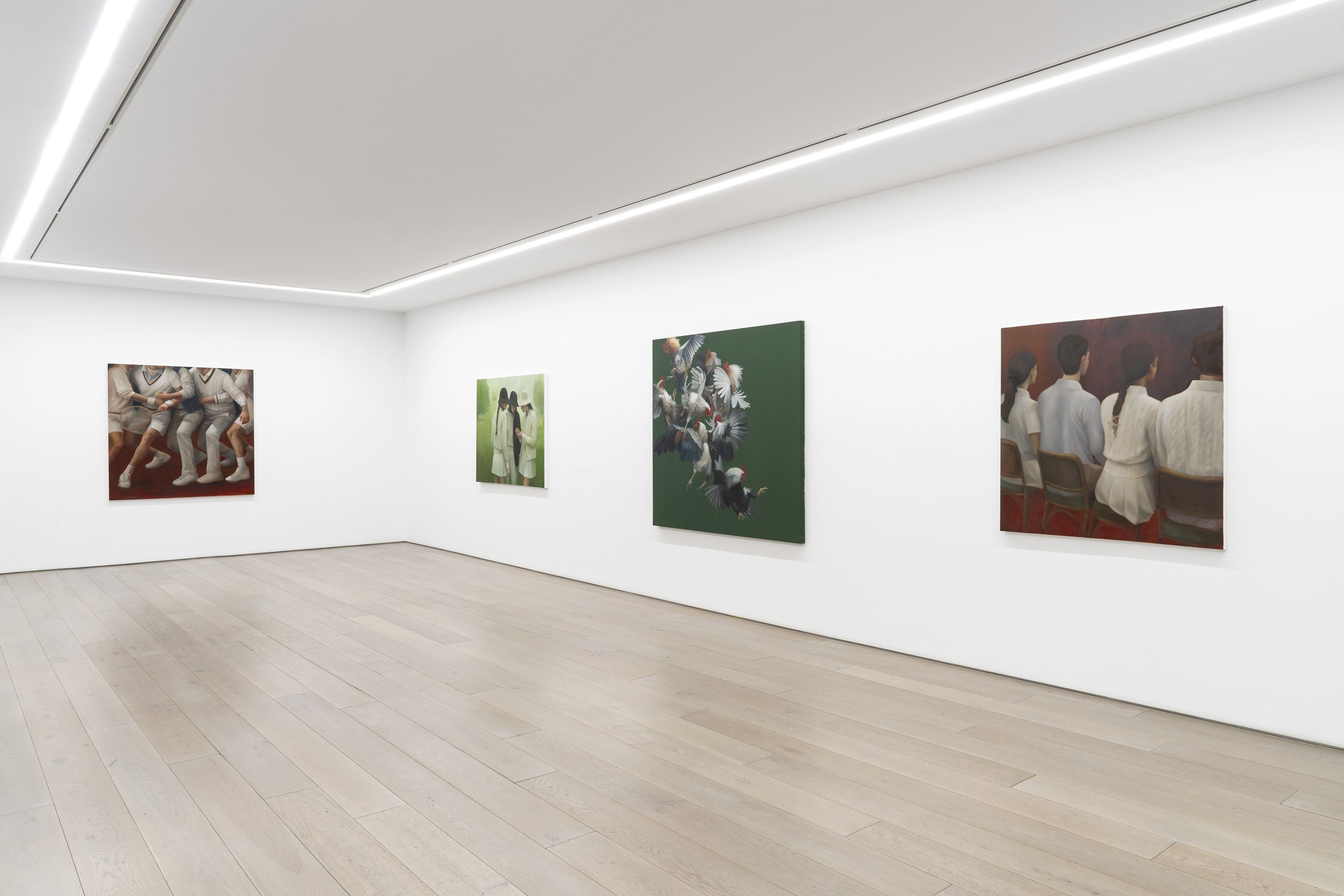
Perrotin is pleased to present Colosseum, the gallery’s first exhibition with Holly Lowen and her debut in New York. Through rhythmically charged compositions, she interrogates the thin line between instinct and control. Known for high-energy scenes of athletes and animals, in her new body of work, Lowen expands these motifs into complex portraits that examine patterns of behavior both on and beyond the court.
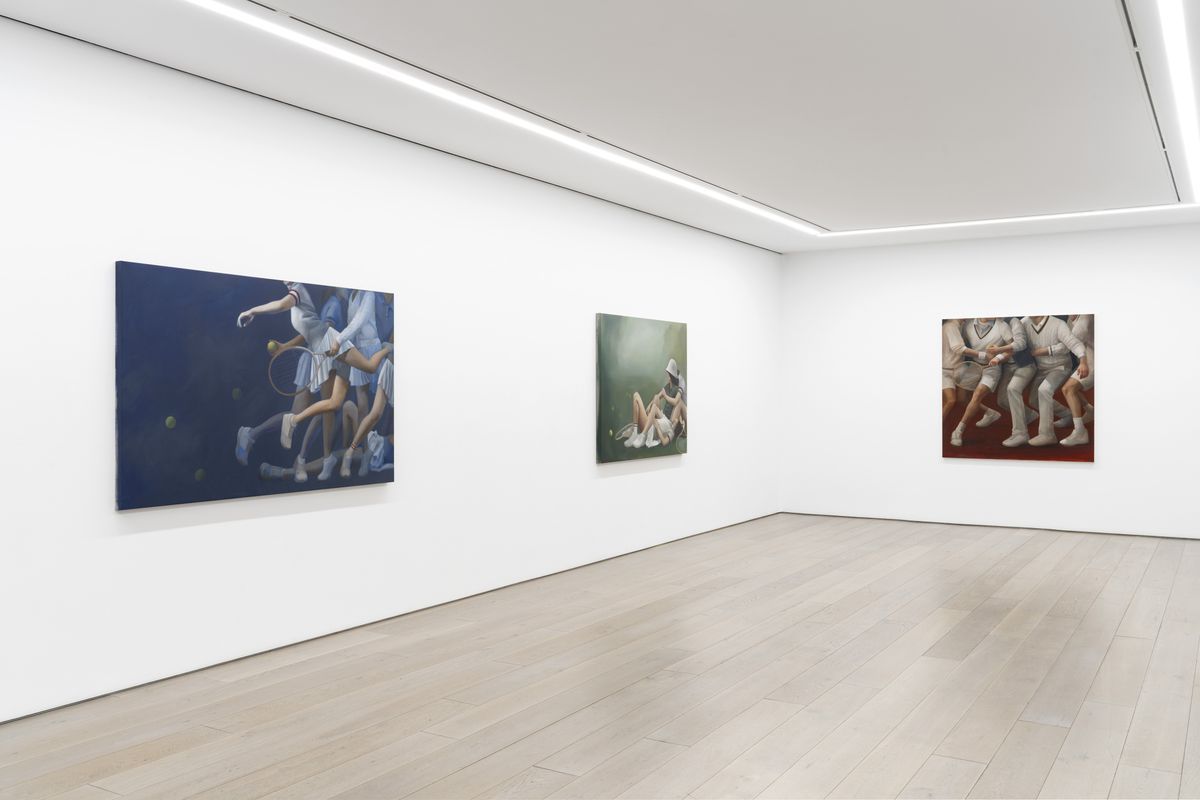
Originally trained in interior architecture before earning an MFA in painting, Lowen’s work is grounded in a strong understanding of color, form and composition. Working across oil, pen, charcoal, and pastel, she builds surfaces on top of an absorbent vinyl paint that creates a rich tonal depth, recalling Peter Paul Rubens’ use of opulent colors. In Colosseum, Lowen’s paintings of tennis players operate as studies in behavioral performance, where bodies cycle through moments of intensity, collapse, and recovery. While their movements echo the rhythm of battle, her figures are dressed in classic white uniforms, projecting a façade of extreme composure. This tension underscores the psychological stakes of her scenes, where control is both performed and at risk of unraveling.
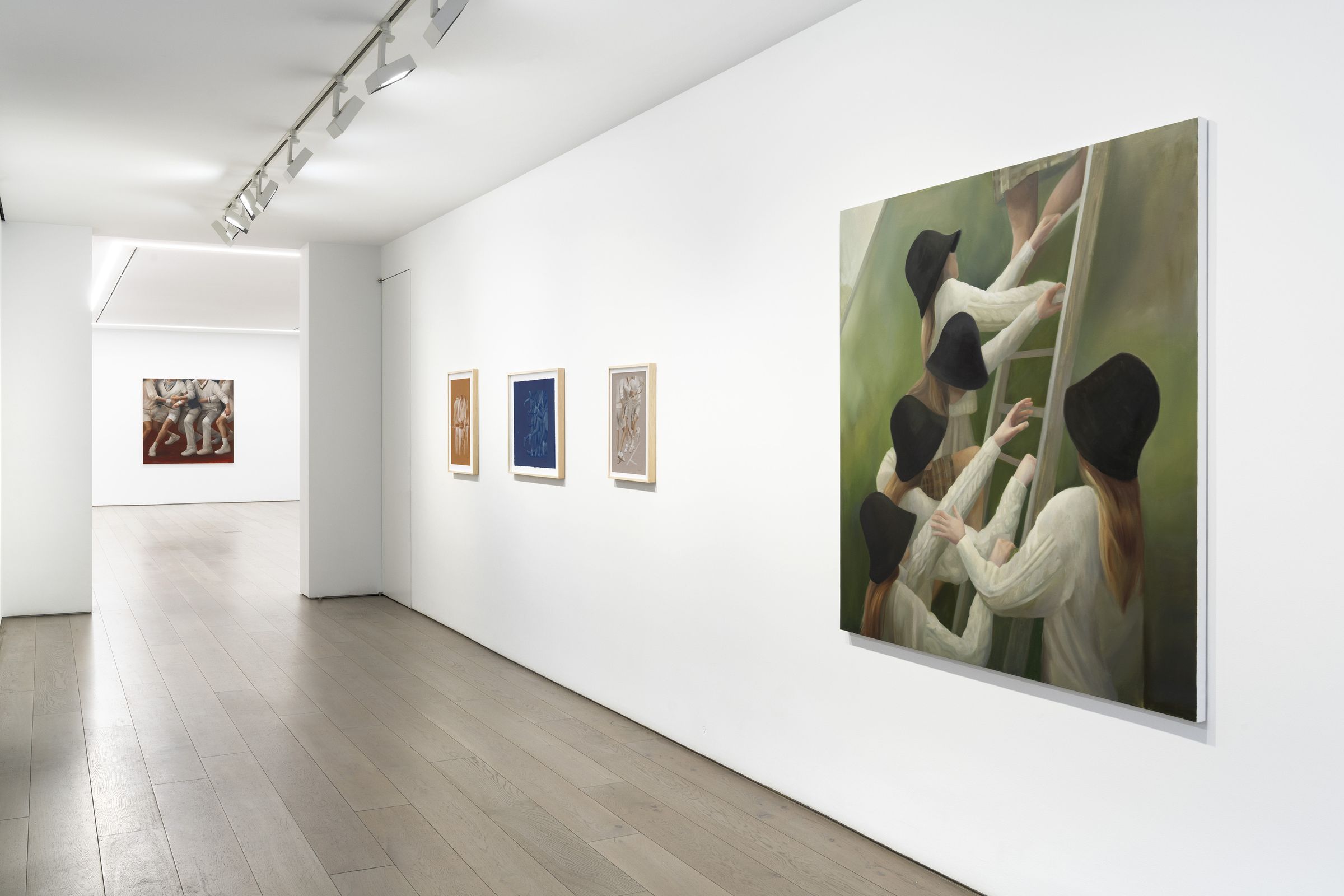
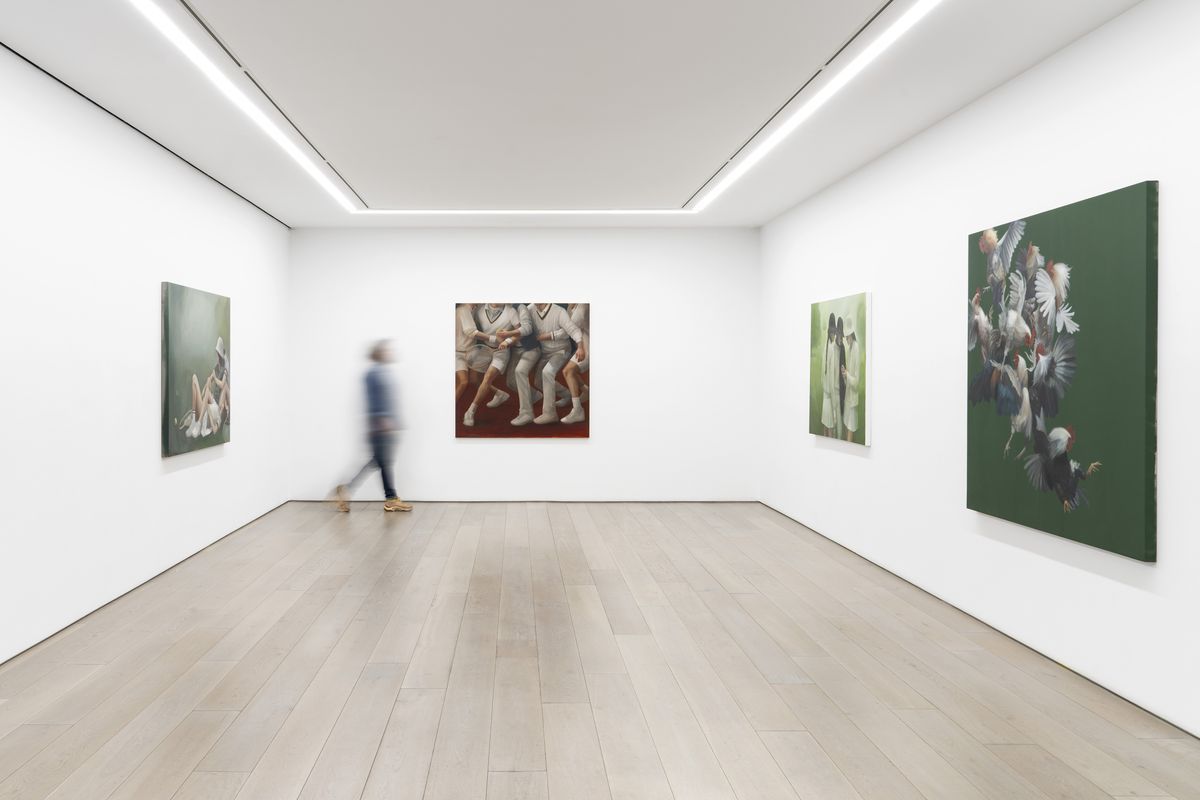
Lowen uses figuration as a pathway to abstraction, entangling subjects in environments that exist just beyond the threshold of reality. Throughout the exhibition, bodies are fragmented, elongated or obscured, disrupting our understanding of the figures before us. In State of Nature, Lowen employs sequential fragmentation, reminiscent of photographs by Eadweard Muybridge, to convey bursts of motion across time within a single frame. Similarly, in Leviathan, male figures’ limbs are intertwined in a composition charged with latent sexuality. The artwork titles reference English Philosopher Thomas Hobbes, who defines Leviathan as an authority who enforces our social contract, and State of Nature as a condition where humanity would collapse in the absence of authority. Elsewhere in the exhibition, figures appear in fallen states: such as in Collapse, where bodies recline and fold into one another. Lowen’s scenes carry a disquieting, dreamlike ambiguity, where impossible anatomies and unstable compositions blur the line between familiar and uncanny.
Lowen’s new body of work marks a departure from purely high-energy action toward moments of suspension, focusing on figures who are not playing but orbit the game, encompassing a broader social commentary. In Dunbar’s Number, a ball boy watches a match from afar, embodying a system structured by aspiration and subordination. Nearby, in Shared Myth, a group of teenage girls focus intently on a string with a stark red hue that unsettles the scene, reminiscent of the mythological Ariadne’s thread. Deprived of facial expressions, we are left to wonder whether they are friends or rivals, a strategy that recalls the work of René Magritte, for whom facelessness transformed ordinary scenes into philosophical puzzles. In Lowen’s work, hidden identities become an ominous critique on societal repression.
An animal counterpart appears in Fragile Society, where chickens are suspended mid-fall, locked in the violent choreography of a cockfight, an ancient blood sport shaped by human intervention. This recalls Lowen’s early series of intertwined flamingos, painted as symbols of both grace and strength. Her depictions of birds stem from an interest in the juxtaposition between their refined appearance and fierce, instinctual behavior. Though now largely domesticated, chickens retain a deeply ingrained hierarchical structure, particularly among roosters where dominance is enforced. This underlying aggression calls attention to the limits of imposed order—a parallel that resonates with her scenes of tennis, a sport that masks aggression within a controlled social framework.
Lowen is ultimately interested in the human desire to impose order on chaos, and the consequences of repressing primal instincts. While society channels these impulses into acceptable outlets like sports, Lowen posits that such instincts do not disappear, but accumulate, potentially emerging in unpredictable ways.
About the artist
Holly Lowen is an artist whose work explores the psychological tension between control and instinct. Through a dynamic interplay of figuration and abstraction, she investigates how civility, ritual, and repression intersect with vulnerability and primal drive. Drawing from art history, sports psychology, and existential philosophy, her practice often centers on social performance—examining spaces like the tennis court as microcosms of human struggle.
In Lowen's paintings, tennis' polished uniformity, polite decorum, and underlying aggression become metaphors for the contradictions of modern life: where precision and control offer both liberation and confinement. Her entangled figures, influenced by the dramatic intensity of Old Master compositions, disrupt formal structures to reveal the fragility of societal norms and the simmering chaos beneath composed surfaces.
A recent graduate of New York Academy of Art's MFA program, she was the subject of a solo exhibition at Simchowitz Gallery in Los Angeles, California in 2025. Perrotin is proud to present Holly Lowen's first New York solo exhibition in June 2026.
Installation Views
Artists
Your Notes
Record your impressions