Opening reception
Nascent Bodies
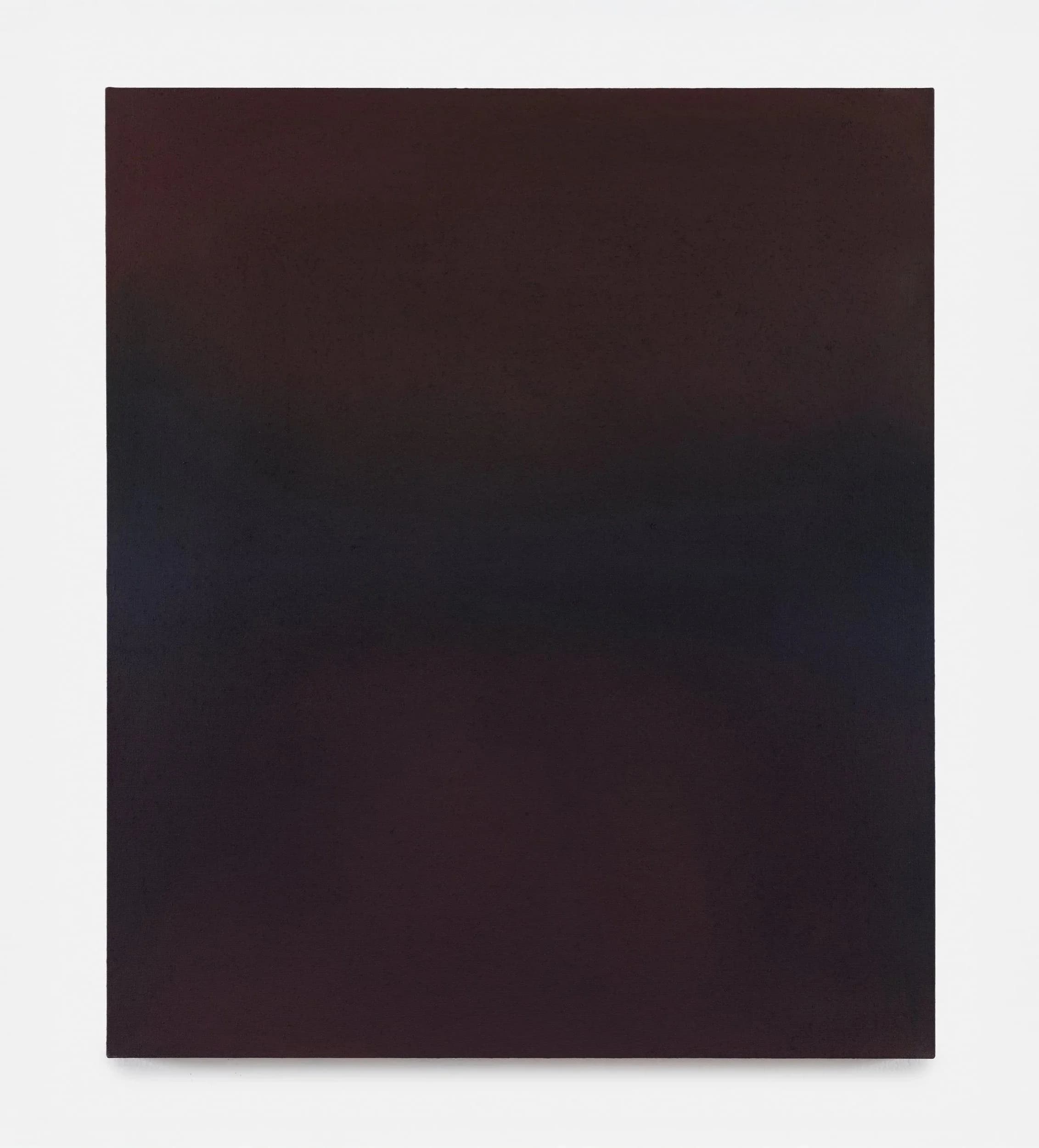
The sublime is transitional, transformational, a radically reordering variety of aesthetic experience. It can arise from an encounter with something vast and seemingly beyond comprehension, but equally from a sudden awareness of the strangeness and vulnerability of our own bodies. In the paintings of Maximilian Rödel and sculptures of Gabriele Beveridge, these distinct experiences of the sublime find expression through radically different material and perceptual means. Rödel's luminous, atmospheric paintings suggest expanses beyond the limits of human perception, while Beveridge's delicately wrought glass sculptures bring us into uncomfortable proximity with the fragility and mutability of life. Both practices heighten our awareness of the body as the instrument through which we encounter and attempt to comprehend the world. The sublime has the power, as Anne Carson writes—in her essay on the classical scholar Longinus—to ‘echo from soul to soul.’ The most obvious etymological root of the term is the Latin sublimis, meaning elevated: the heavens are up there in this above, connoting celestial goodness and power. Perhaps the most enduring apprehension of the sublime is this mysterious sensation of spiritual intelligence. Rödel's paintings—in their scale, radiance and meditative stillness—elicit a heightened form of absorption, a sensation of connection akin to that sought in divine experience. Yet their chromatic intensity and depth are also profoundly physical. Subtle gradations of color seem to gather and disperse across their surfaces, producing an almost atmospheric density that resists any fixed sense of space or distance. The eye moves between areas of saturation and dissolution, as though attempting to apprehend something that remains perpetually beyond its reach. In the Middle Ages, the adjective was modified into sublimare, a verb that entered common usage amongst alchemists to describe the transformation of substances through heat, from solid to vapor and back again. Beveridge's sculptures, glass handblown into organic forms, recall the vials of the medieval alchemist: they are organs for sublimity. Yet even the alchemist and her tools are vulnerable to the material transmutations and mutability she studies. In Three Bodies, glass volumes appear to cycle through different states of tension, distension and collapse. The bottom vessel retains the reassuring symmetry of a scientific instrument, its rounded form designed to withstand extremes of temperature and pressure. Above it, another swells beyond its assigned space, while the middle form sags over its support, its apparent softness at odds with the brittle rigidity of glass. There is something both seductive and disquieting in these forms, possessing the susceptibility of flesh while remaining unmistakably inorganic. Their swollen and yielding contours suggest bodies subject to forces they cannot fully withstand or control. The sculptures make tangible the precariousness of physical containment and the hubris of those who imagine themselves capable of subjugating the material world.
Alchemy might also be understood as a guiding aesthetic in Rödel's paintings: form is diffuse, vaporized, in a state of perpetual dissolution. Subtle gradations of color suggest condensation and fluctuations of temperature, while the bifurcated compositions of works such as Bridge evoke a passage between states. Where Beveridge's glass gives the impression of matter under pressure, Rödel's…
Venue info
 Carvalho
Hours
Closed · opens tomorrow 12PM
MonClosedTueClosedWedClosedThu12PM – 6PMFri12PM – 6PMSat12PM – 6PMSunClosed